

Ever worn a ring or pair of earrings that looked perfect when you bought them, only to end up with itchy skin, redness or a strange green mark later? If you've experienced this, you're not alone. And surprisingly, the problem may not be the gold finish itself.
When it comes to hypoallergenic gold-plated jewellery, what sits underneath the gold matters just as much as what you see on the surface. The base metal, the quality of the plating and how you care for the piece can all affect how it performs when worn regularly.
If you're looking for jewellery for sensitive skin or simply want pieces you can wear comfortably every day, knowing what to look for can make choosing much easier.
In this guide, we'll break down why jewellery can irritate your skin, what "hypoallergenic" actually means, and how to choose and care for gold-plated jewellery for everyday wear.
 Hypoallergenic gold-plated jewellery for everyday wear
Why Does Jewellery Irritate Sensitive Skin?
One of the biggest reasons jewellery can cause irritation is the metal underneath the finish.
Gold-plated jewellery has a layer of gold applied over another metal. If that underlying metal contains something your skin reacts to, the plating may not completely prevent irritation, particularly as it becomes thinner with regular wear.
Nickel is one of the most common metals associated with jewellery-related allergic contact dermatitis. That's why people with sensitive skin often look specifically for nickel-free jewellery.
But there's another reaction you may have experienced: the dreaded green finger.
A green or dark mark doesn't necessarily mean you're having an allergic reaction. Copper-containing metals can react with sweat, moisture and natural oils on your skin, leaving temporary discolouration. This can become more noticeable when the outer plating starts to wear down.
So when choosing jewellery for everyday wear, don't just ask, "Is it gold?"
Ask:
What's underneath the gold?
 Gold-plated jewellery base metal and plating explained
What Does "Hypoallergenic" Actually Mean?
"Hypoallergenic" sounds reassuring, but it doesn't mean allergy-proof.
The term generally describes a product designed to have a lower likelihood of causing an allergic reaction or irritation. However, everyone's skin is different, so no material can guarantee that every person will have the same experience.
It's also useful to understand the difference between hypoallergenic and nickel-free.
-
Nickel-free means the jewellery does not contain nickel.
-
Hypoallergenic is a broader term suggesting a lower likelihood of irritation or an allergic reaction.
For sensitive skin, it's therefore worth checking the actual material specifications rather than relying on the word "hypoallergenic" alone.
Sterling silver is another material commonly chosen for jewellery. 925 sterling silver contains 92.5% silver alongside other alloying metals, so if you have a known metal sensitivity, it's still worth checking the specific composition of the piece.
For example, the Paperclip Chain in 925 Sterling Silver offers a sterling silver option for everyday styling.
 925 sterling silver jewellery for sensitive skin
How to Choose Gold-Plated Jewellery for Everyday Wear
If you're buying a piece you plan to wear regularly, there are a few details worth checking before you add it to your jewellery box.
1. Check the Base Metal
"Gold-plated" only tells you about the outer finish.
Look for information about what's underneath it. A clearly specified base metal gives you a better understanding of what you're actually wearing, particularly if you have sensitive skin.
2. Look for Nickel-Free Information
If you've experienced irritation from jewellery before, look for pieces that clearly state whether they're nickel-free.
Don't assume that every gold-plated or hypoallergenic piece is automatically nickel-free.
3. Understand Gold Purity and Microns
You may see jewellery described as 18kt gold micron plated.
The 18kt refers to the purity of the gold used in the plating, while micron refers to the thickness of the plating layer.
In general, a thicker layer can be more resistant to everyday wear, although how long plating lasts also depends on friction, moisture, sweat and how you care for the piece.
This is why "gold-tone" and "18kt gold micron" aren't interchangeable descriptions. The latter gives you considerably more information about the finish.
For example, Self Love Jewels' Ajna Chakra Cufflinks are described as 18kt gold micron pieces.
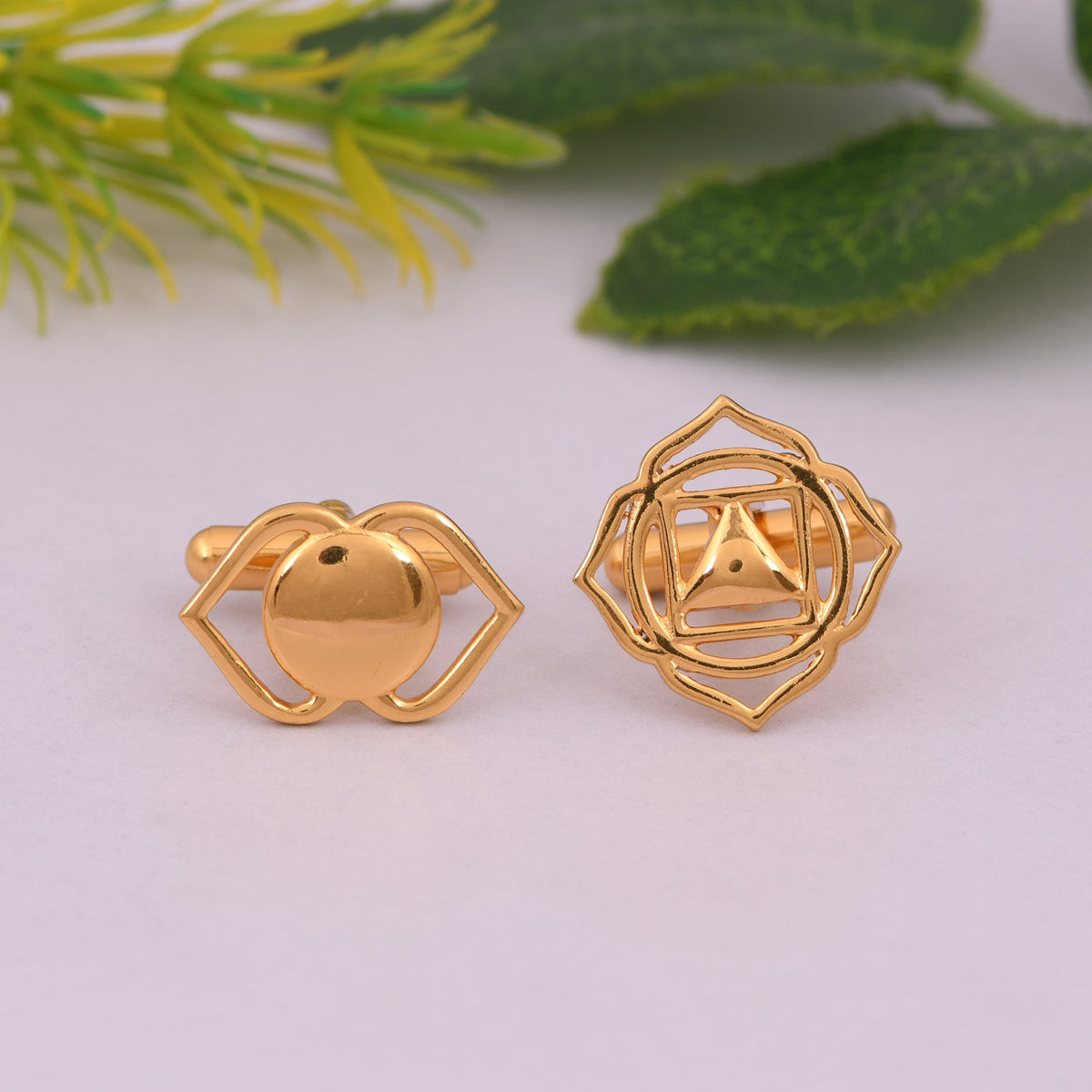
Everyday hypoallergenic gold-plated jewellery
4. Think About How You'll Wear It
A necklace worn occasionally won't experience the same amount of friction as a ring, bracelet or anklet worn every day.
If you're choosing everyday jewellery, consider where the piece sits on your body and how much exposure it will have to water, sweat, perfume and skincare products.
How to Make Gold-Plated Jewellery Last Longer
Even good-quality gold plating needs some care.
A few simple habits can help preserve the finish:
-
Remove jewellery before showering or swimming.
-
Apply perfume, lotion and skincare before putting jewellery on.
-
Take pieces off during workouts when possible.
-
Wipe jewellery gently with a soft, dry cloth after wearing it.
-
Store pieces separately to prevent scratches and friction.
-
Keep jewellery away from excessive moisture and humidity.
And if your skin reacts to a particular piece, don't ignore it. Take the jewellery off and see whether the reaction settles.
Gold-Plated Jewellery: What Matters Most?
Gold-plated jewellery isn't automatically unsafe for sensitive skin, but it isn't automatically hypoallergenic either.
The key is to look beyond the surface.
Check the base metal, gold purity, plating specification and nickel-free information where available. These details can help you make a more informed choice, especially when you're looking for jewellery to wear every day.
At Self Love Jewels, individual pieces have their own material specifications, so check the product details before choosing your next everyday piece.
Explore Self Love Jewels' Latest Jewellery Collection Here.
FAQs
1. Is gold-plated jewellery safe for sensitive skin?
It depends on the materials used underneath the plating. If you have sensitive skin, check the base metal and look for clear information about whether the piece is nickel-free. Gold-plated jewellery isn't automatically hypoallergenic simply because it contains gold.
2. Is gold-plated jewellery hypoallergenic?
Not necessarily. "Gold-plated" describes the finish, while "hypoallergenic" refers to the likelihood of a material causing a reaction. The base metal underneath the plating matters too.
3. Why does gold-plated jewellery turn my skin green?
This is often caused by copper-containing metals reacting with sweat, moisture or natural oils on your skin. It's generally a chemical reaction rather than an allergy and can become more noticeable as the plating wears down.
4. How long does gold plating last?
There's no single timeframe. It depends on plating thickness, how often you wear the piece, friction and exposure to water, sweat, perfume and skincare products. Proper care can help extend the life of the finish.
5. Can I wear gold-plated jewellery every day?
Yes, but everyday wear exposes jewellery to more friction, moisture and chemicals. Choosing pieces with clearly stated materials and caring for them properly can help maintain their appearance and make them more comfortable to wear regularly.


